From nature, back to nature

The Complex Truth Beneath the Green Promise
Amid the global wave of plastic bans, disposable biodegradable tableware has rapidly emerged as the "savior" of traditional plastic tableware. It promises the best of both worlds: retaining the convenience of disposables while avoiding the eternal curse of "white pollution." However, beneath this seemingly promising green landscape lies a truth far more complex than we might imagine.
8/14/20253 min read
I. Not All "Green": Clarifying Three Concepts
First, it's crucial to understand that "degradable" is a catch-all term, encompassing three distinct technological approaches with vastly different environmental benefits.
1. Biodegradable Plastics (e.g., PLA)
Source: Typically derived from starch from plants like corn and cassava.
Core: Under specific industrial composting conditions (suitable temperature, humidity, and microbial flora), they can be broken down by microorganisms into carbon dioxide, water, and humus in a relatively short period of time.
Key Misconception: They do not degrade rapidly in the natural environment and are unsuitable for home composting. Discarded in the wild or the ocean, their degradation rate may be as slow as that of traditional plastics.
2. Light/Oxygen Degradable Plastics
Source: Degradable additives are added to traditional plastics (e.g., PP and PE).
Core: Through light or oxidation, the plastic breaks down and disintegrates into invisible microplastics. Significant Risk: It doesn't truly "disappear," but rather breaks down into microplastics that are even more difficult to recycle, causing further secondary pollution in soil and oceans. These products are being phased out in many countries.
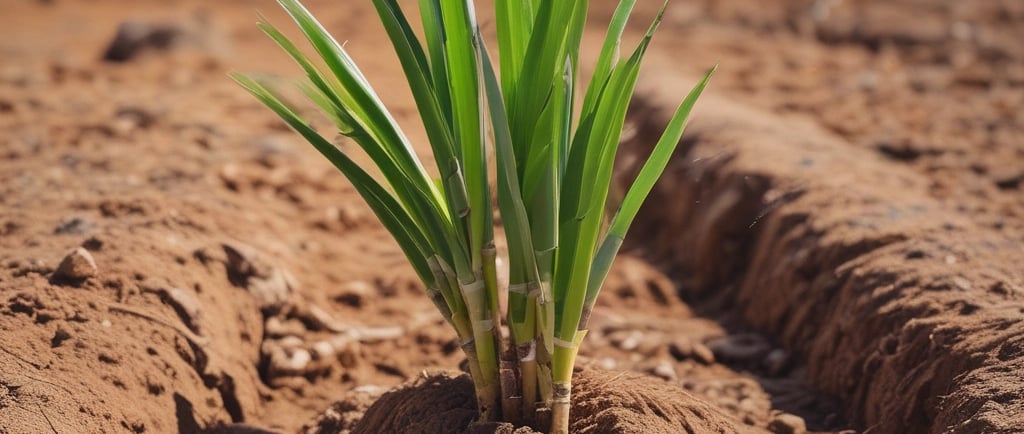
3. Products Made from Natural Materials (e.g., Bamboo Powder, Sugarcane Bagasse)
Source: Made from agricultural waste (e.g., sugarcane bagasse, wheat straw) or rapidly renewable plants (e.g., bamboo).
Core Value: This option is closest to what the public understands as "environmentally friendly." They are naturally derived and generally degrade in the natural environment without causing any harm.
Advantage: It truly transforms waste into treasure, creating high-value-added utilization of agricultural waste.
II. The Gap Between Ideal and Reality: The Greatest Challenge Relies on End-of-Life Disposal
The environmental value of biodegradable tableware isn't realized by consumers, but rather determined during the waste disposal phase. This lies at the heart of the current dilemma.
Lack of Strict Separated Recycling: If biodegradable tableware (especially PLA) is mistakenly placed into traditional plastic recycling streams, it can contaminate the entire batch of recycled plastic, reducing its quality. Conversely, if traditional plastics are mixed with biodegradable waste, the efficiency and quality of industrial composting will be affected.
Severe Insufficiency of Industrial Composting Facilities: The "perfect degradation" of PLA tableware requires specialized industrial composting plants. However, such facilities are far from widespread worldwide. In cities without supporting treatment systems, these "biodegradable" tableware often end up in landfills or incinerators, negating their environmental advantages.
Misleading Consumption Under "Biodegradable" Labels: Some consumers may be lulled into complacency by the "Biodegradable" label, developing the misconception that "since it degrades, it's okay to discard it at will," which in turn exacerbates the waste problem.
A waste management expert once pointedly pointed out: "The pollution impact of 'biodegradable' tableware carelessly discarded in nature is almost the same as that of ordinary plastic. Its environmental value depends entirely on a mature and efficient back-end processing system."
III. The Road Ahead: From "Pseudo-Antidote" to "Real Solution"
To truly realize the value of biodegradable tableware, systemic change is needed, not just a change in materials.
1. Policies and Standards First: The government needs to introduce clearer and stricter standards and labeling regulations to eliminate the misappropriation of "pseudo-degradable" products. At the same time, significant investment should be made in waste sorting and collection systems and terminal treatment facilities such as industrial composting.
2. Technological Innovation and Material Competition: Encourage the research and development of new materials that truly degrade quickly and harmlessly in the natural environment (such as seaweed-based plastics), and reduce the cost and improve the performance of products made from natural materials (such as sugarcane bagasse tableware).
3. The Core Role of Consumer Education: The public must understand that "degradable" does not mean "disposable." Proper sorting and disposal are the final mile to realizing its environmental value. More importantly, "reduction" and "reuse" should be promoted as primary principles, and degradable tableware should only be a "second-best option" when necessary.
Conclusion: Responsibility Beyond Convenience
Disposable degradable tableware is a positive attempt to address the environmental crisis, but it is by no means a simple, perfect answer. Rather, it serves as a mirror, reflecting the complexity and arduousness of our transition from a linear consumer society (acquire-make-discard) to a circular economy. Its ultimate value lies not in its chemical "degradability" but in whether we can build a corresponding, responsible social disposal system. When we pick up a biodegradable lunch box, we're choosing more than just a product; we're choosing to shoulder the systemic responsibility of ensuring it has a good beginning and a good end. True green always prioritizes convenience.
Product List
Bagasse Plates
sales@elloome.com
+86-13603832819
© 2025. All rights reserved.